
Atlantic City, New Jersey
Listen as Fannie Lou Hamer talks about her fight for equality.
Other than her home state of Mississippi, no other state has as much historical significance for Fannie Lou Hamer than Atlantic City, New Jersey.

Atlantic City is where Hamer carried the raw truth about Mississippi’s violence and racially-driven voter suppression onto a national stage. At the 1964 Democratic National Convention, Hamer appeared before the Credentials Committee as a representative of the Mississippi Freedom Democratic Party (MFDP), which challenged the seating of Mississippi’s - all-white delegation - and demanded political representation for Black Mississippians who had been excluded from the democratic process.

In her testimony on August 22, 1964, Hamer described the retaliation she faced after trying to register to vote, including being evicted and fired from the plantation where worked and lived, an assassination attempt on her life, constant threats and the brutal beating she endured in the Winona, Mississippi jail.

Hamer’s words exposed the human cost of voter suppression and forced the nation to confront what Black citizens in Mississippi risked daily simply to become “first-class citizens.” Even when President Lyndon B. Johnson tried to interrupt coverage of her testimony with an impromptu press conference, the networks later aired her remarks, making Hamer’s voice and her story impossible to ignore.

Although the MFDP was not fully seated at that convention, Atlantic City became a turning point in Hamer’s public life and in the civil rights movement.

Hamer’s testimony helped educate the nation, strengthened pressure for equal voting rights, and made her one of the most powerful, moral and sought-after voices of her generation. Most importantly, her words coupled with the efforts of Aaron Henry, Ed King, Roy Wilkins and Dr. Martin Luther King aided in the passage of the Voting Rights Act of 1965.

Additionally, due to the direct actions of Fannie Lou Hamer and the MFDP, the Democratic Party adopted a new policy – the Credentials Committee would no longer seat delegates based on their race.

Hamer also spoke on the Boardwalk in Atlantic City about the rights of all Black people to vote. On that same Boardwalk, she was joined by Nathan and Ann Schwerner about the refusal to seat the MFDP at the delegation. A few weeks earlier, the Schwerner’s son, Michael, and two other civil rights workers, James Chaney and Andrew Goodman, were found buried in an earthen dam after being murdered near Philadelphia, Mississippi for trying to help Black people to register to vote during Freedom Summer.

Atlantic City recognizes the accomplishments of Fannie Lou Hamer in many ways. In 2001, a Civil Rights Memorial Garden was constructed to honor the history and individuals of the movement. It features 11 granite columns including one with Hamer’s famous words spoken at the 1964 Democratic National Convention.

In 2004, Stockton University held their first annual Fannie Lou Hamer Symposium to honor her historic legacy in Atlantic City and to challenge students to advance human and civil rights. In 2018, Stockton again celebrated Hamer by naming an event room in her honor. A few years later, union workers held a march for Hamer and unveiled a marker for her on Boardwalk Hall. The African American Heritage Museum, founded by historian Ralph Hunter, features a traveling exhibit of Hamer.

In 2023, Dr. Patricia Reid Merritt, who spearheaded an effort to place a life-size statue of Fannie Lou Hamer in her hometown of Ruleville, Mississippi, donated a statue of Hamer to Stockton University. It currently stands on Boardwalk Hall. And one year later, the first historical marker on the Mississippi Freedom Trail to be placed outside of the state was unveiled on the Boardwalk acknowledging the accomplishments of Fannie Lou Hamer and the MFDP at the Democratic National Convention.

Hamer’s impact on Atlantic City is both historical and symbolic. Atlantic City represents the place where a poor sharecropper from Ruleville stood before the country and asked whether America would live up to its own promises of freedom, democracy, and human dignity. And Atlantic City is determined that Fannie Lou Hamer’s sacrifice – and her legacy never be forgotten.
Photos and Reference Materials.

Fannie Lou Hamer delivers her emotional and historic testimony at the 1964 Democratic National Convention in Atlantic City.
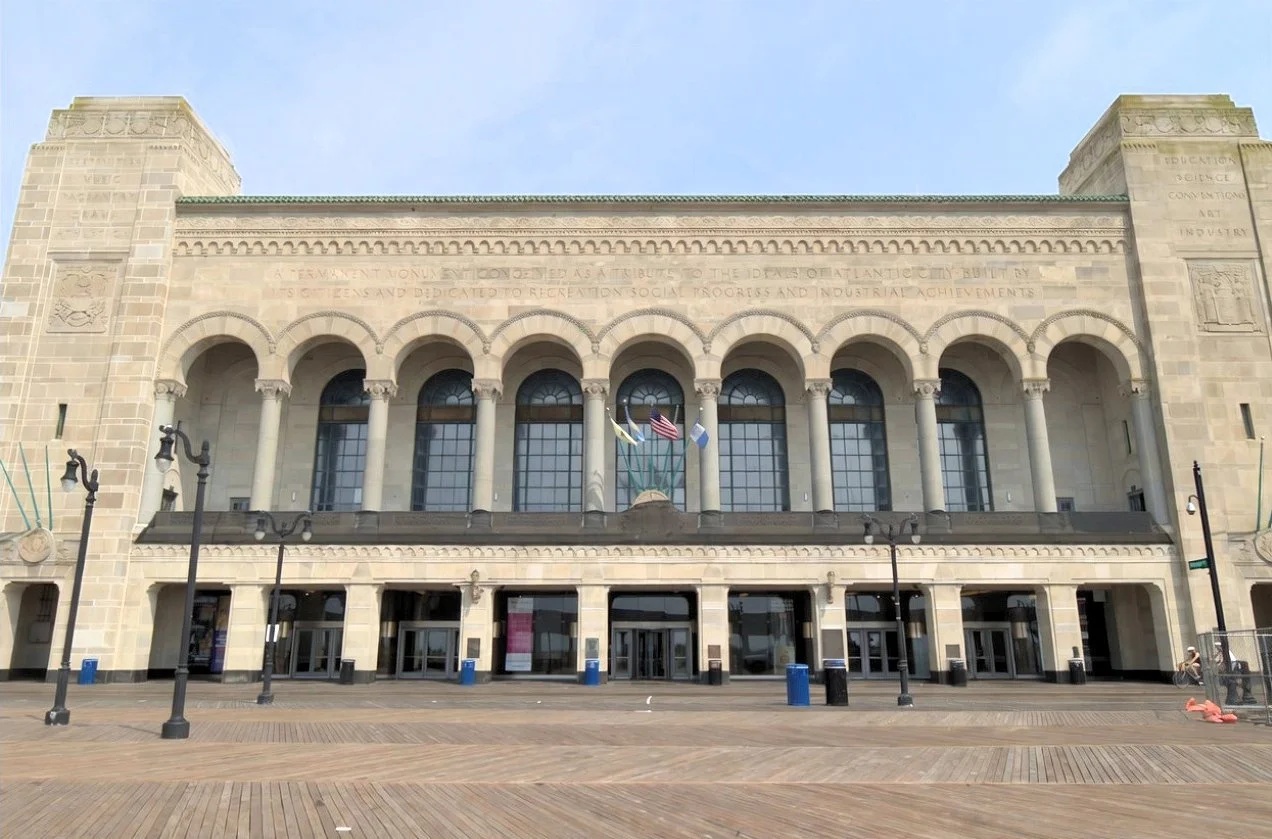
The Convention Center where the 1964 Democratic National Convention was held is now called Jim Whelan Boardwalk Hall and hosts events.
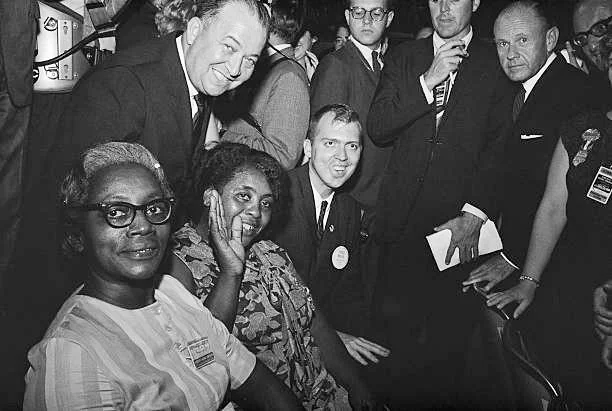
(seated left to right) Annie Devine, Fannie Lou Hamer and Rev. Edwin King, co-founders of the Mississippi Freedom Democratic Party (MFDP), are seated with the Michigan Delegation at the 1964 Democratic Convention.
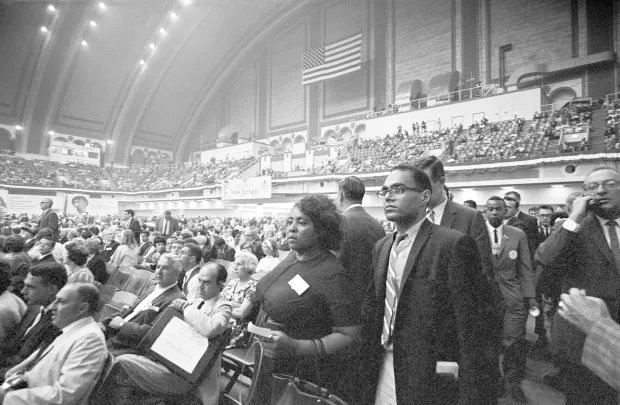
Robert P. Moses and Fannie Lou Hamer observe proceedings at the Democratic Convention.
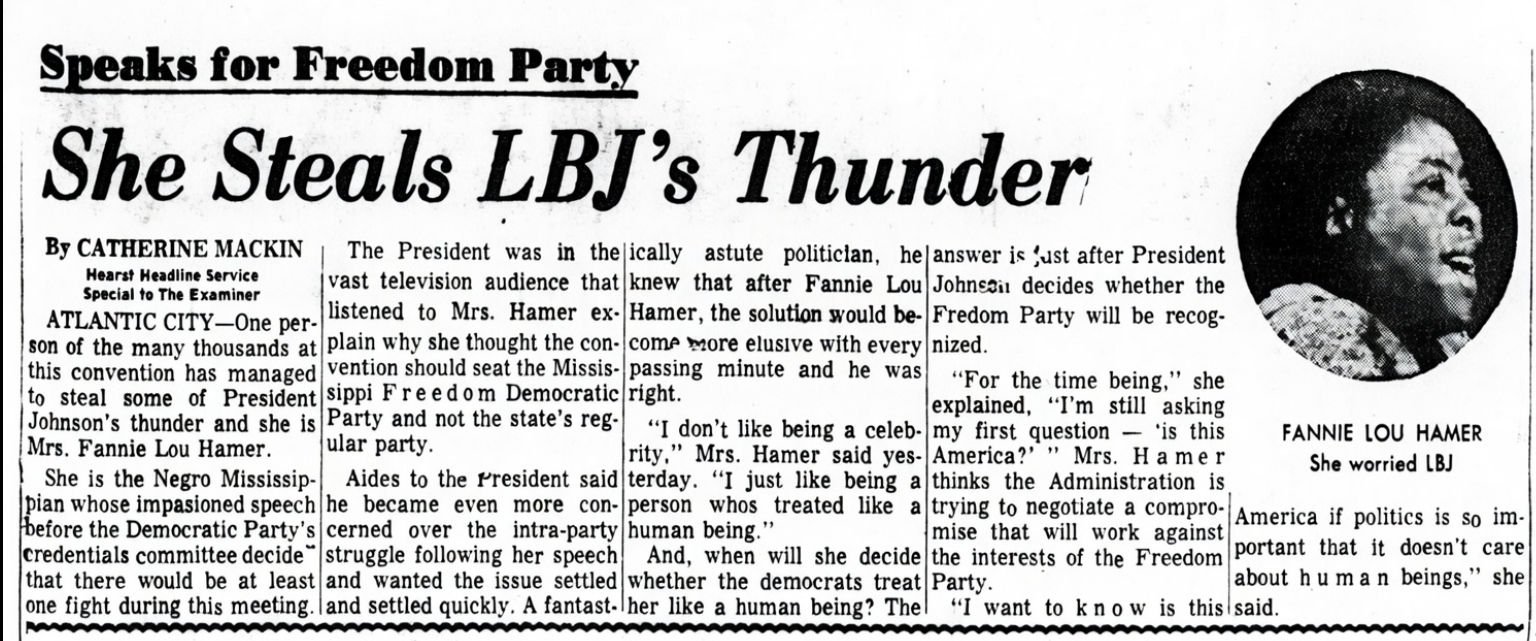
The headline from The San Francisco Examiner's Aug. 26, 1964 edition.
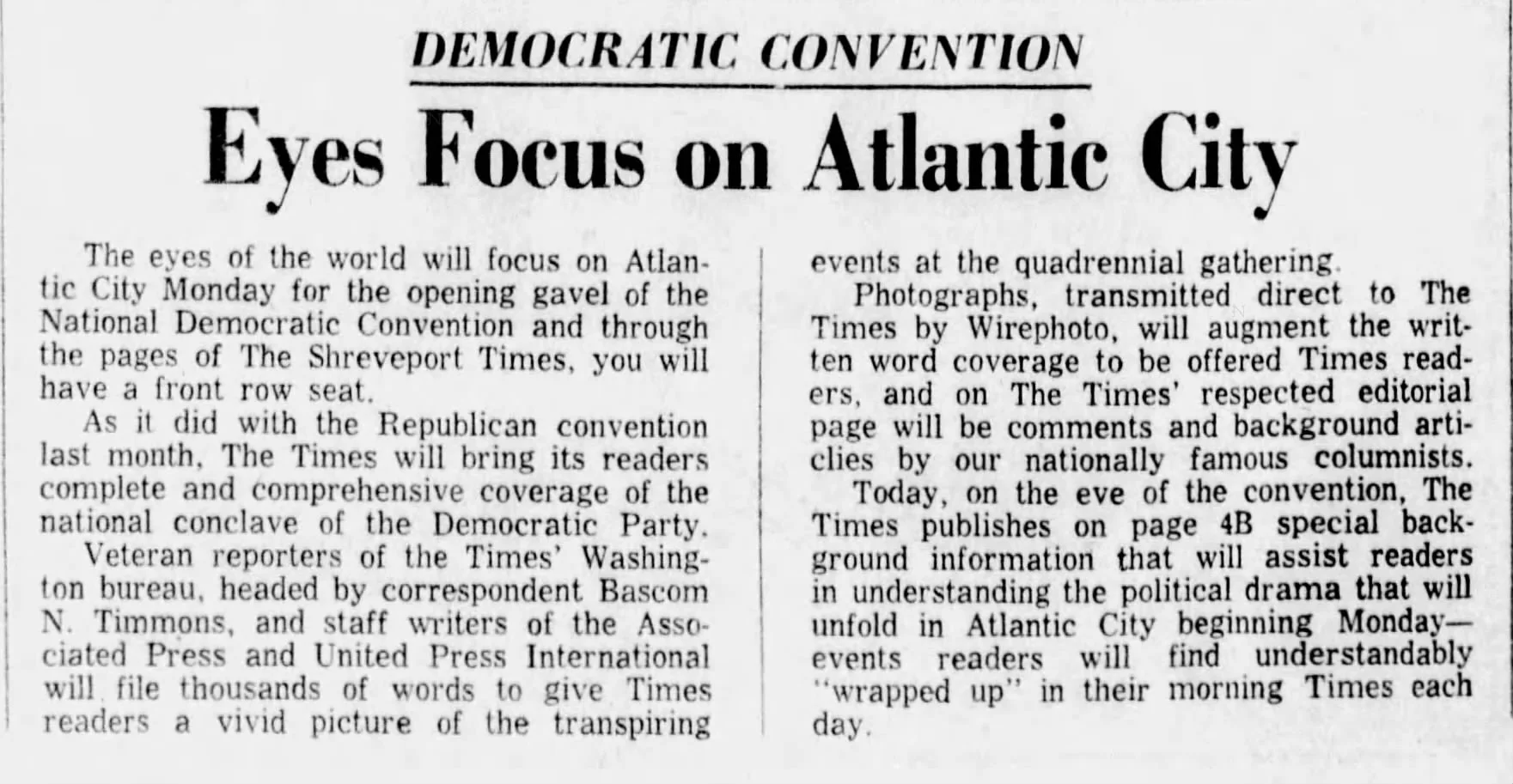
The headline from the Aug. 23, 1964 issue of The Times in Shreveport, Louisiana.
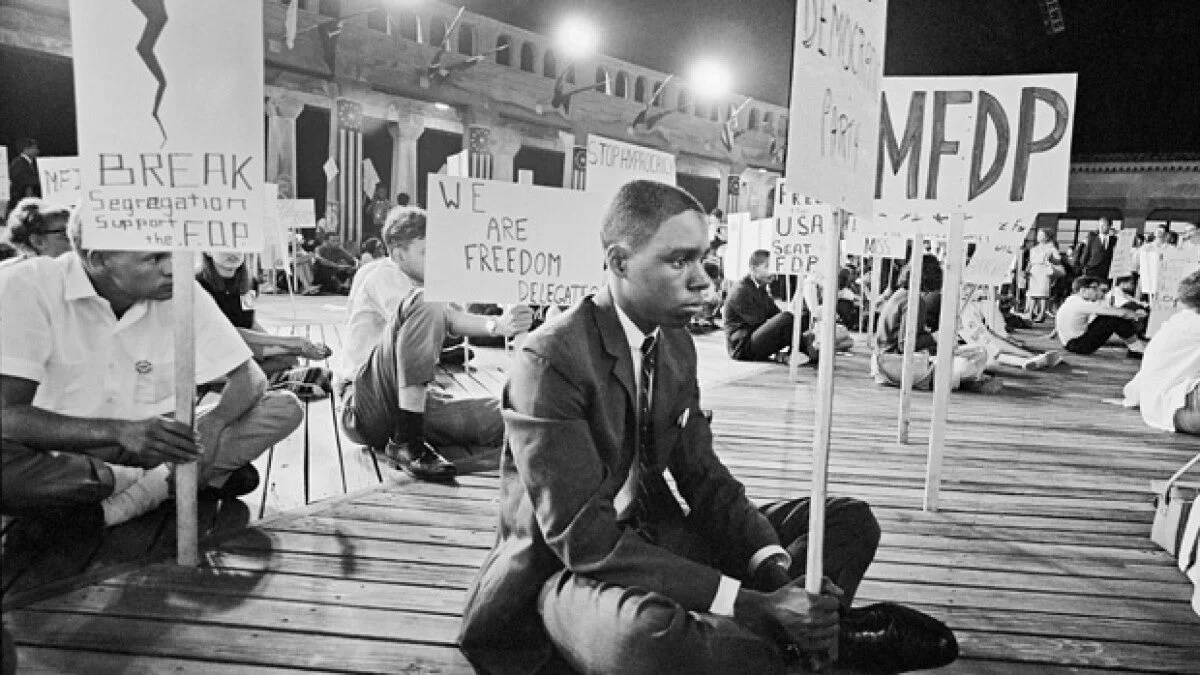
Am MFDP supporter on the boardwalk during the Democratic National Convention in Atlantic City.

Mississippi Freedom Democratic Party (MFDP) founders Fannie Lou Hamer and Ella Baker on the cover of JET Magazine on August 27, 1964.
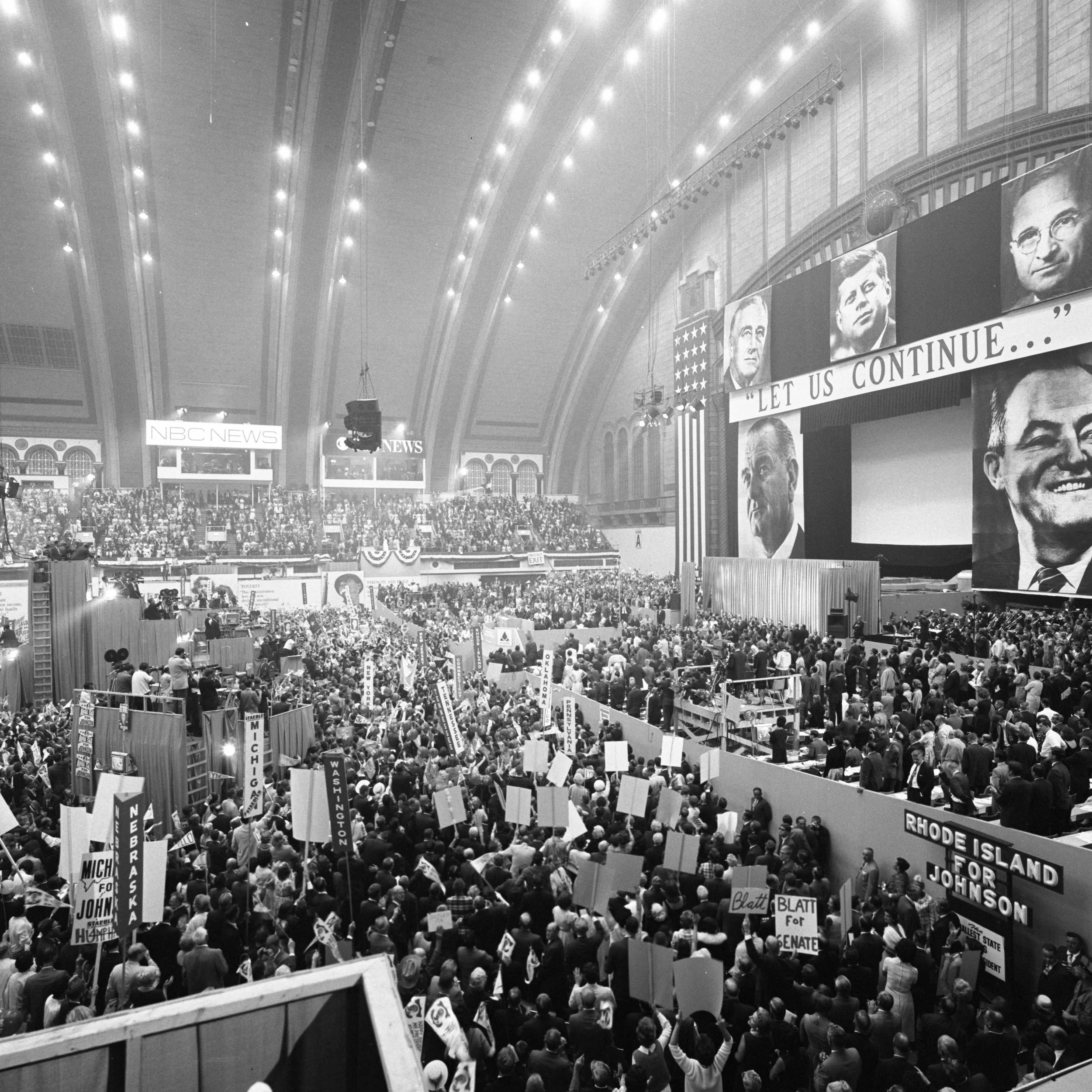
The Convention Center in Atlantic City during the 1964 Democratic National Convention.

The Aug. 23, 1964 headline from The Lexington Herald in Lexington, Kentucky.
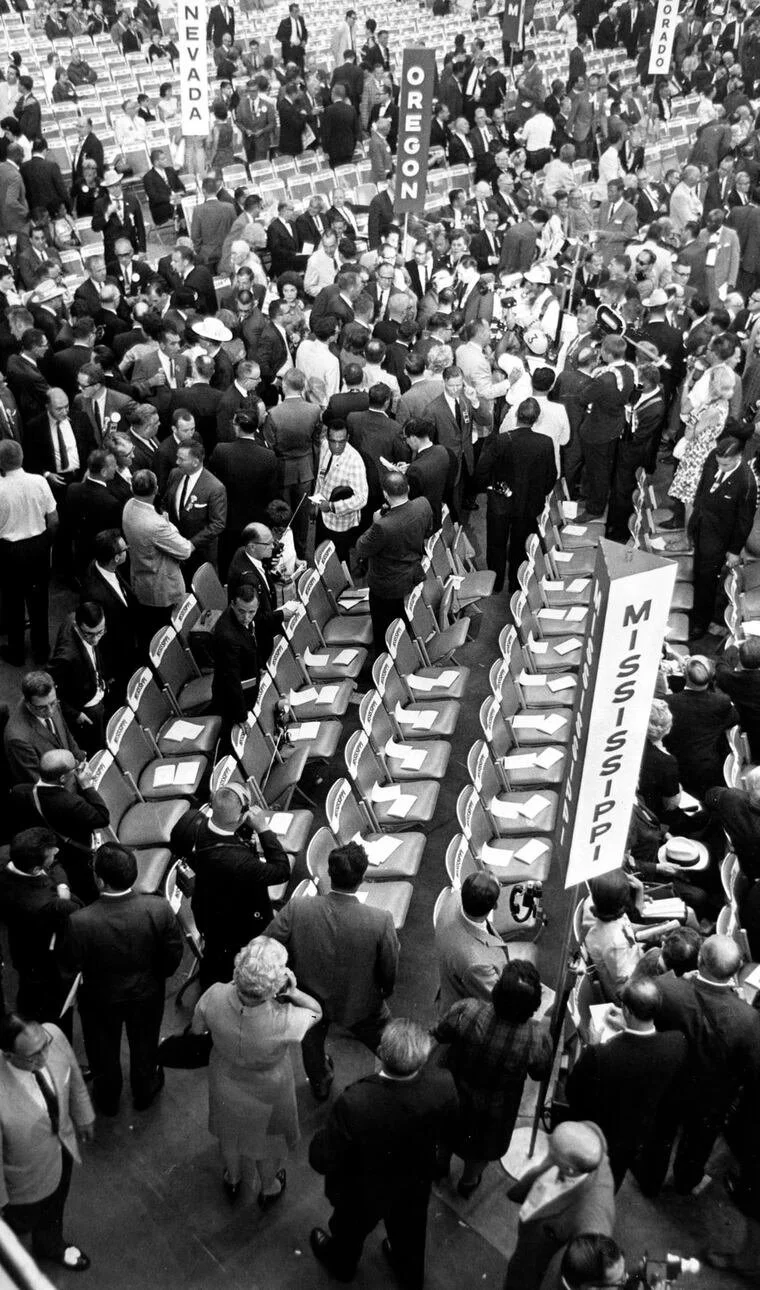
At the the 1964 DNC, the conflict involving the Mississippi Freedom Democratic Party (MFDP) centered on a challenge to seat a multiracial delegation instead of the state's official, all-white regular Democratic delegation, which supported segregation and opposed national party civil rights goals.
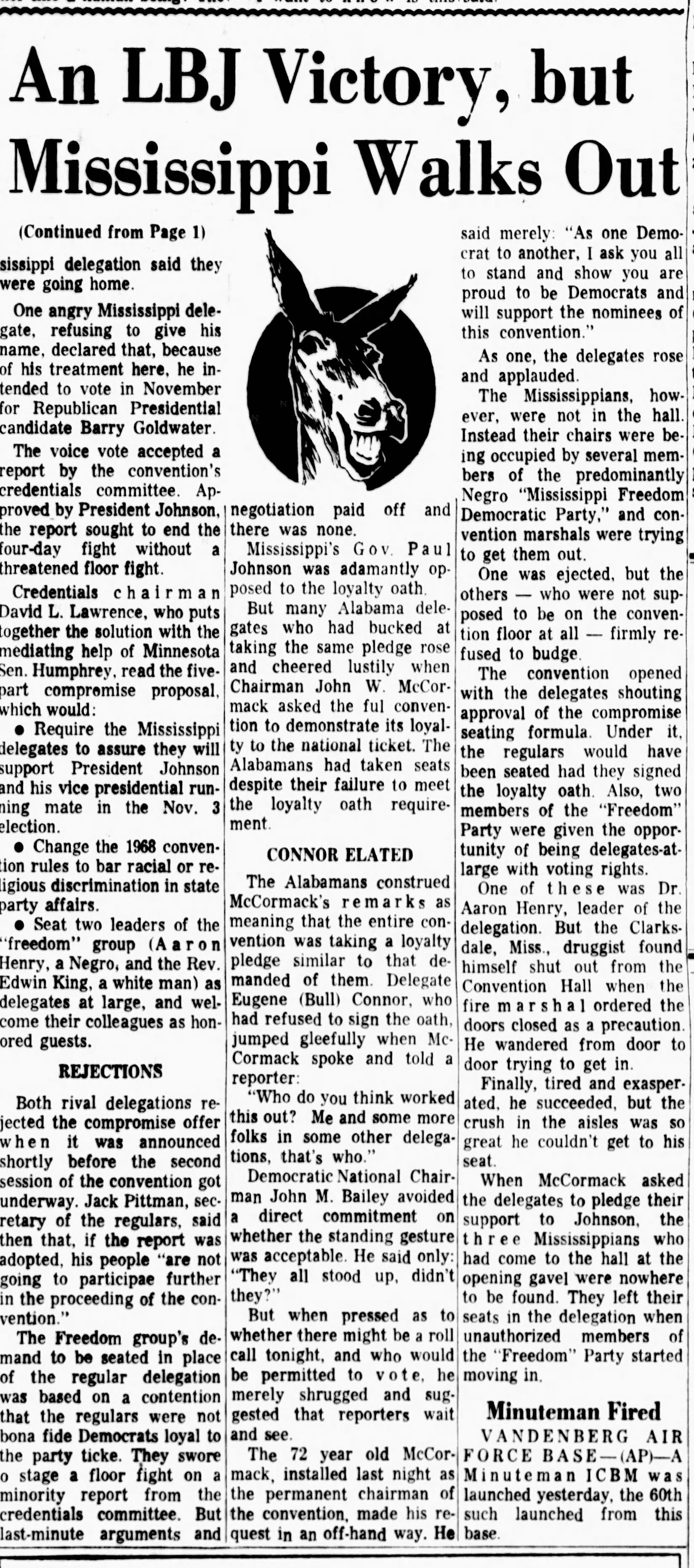
The Aug. 26, 1964 edition of The San Francisco Examiner.
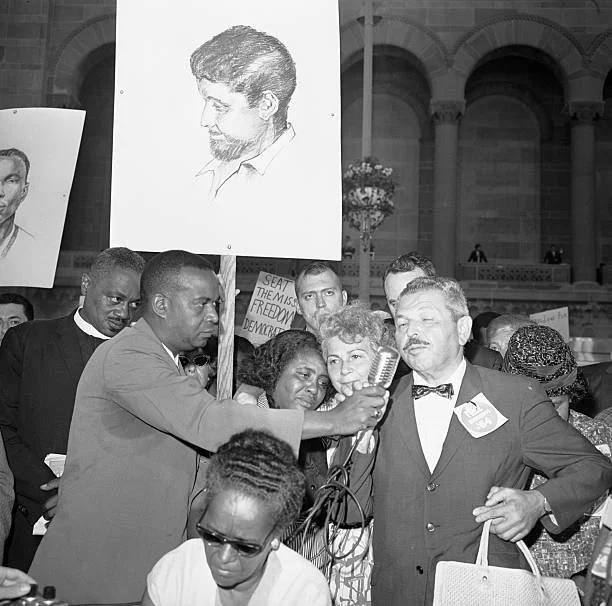
MFDP co-founders (l) Aaron Henry, (seated) Ella Baker and (center) Fannie Lou Hamer with Anne and Nathan Schwerner on the Boardwalk during the Democratic National Convention. The Schwerner's son, Michael (on poster) was murdered with two others in Mississippi a few weeks earlier for trying to help Blacks to register to vote.
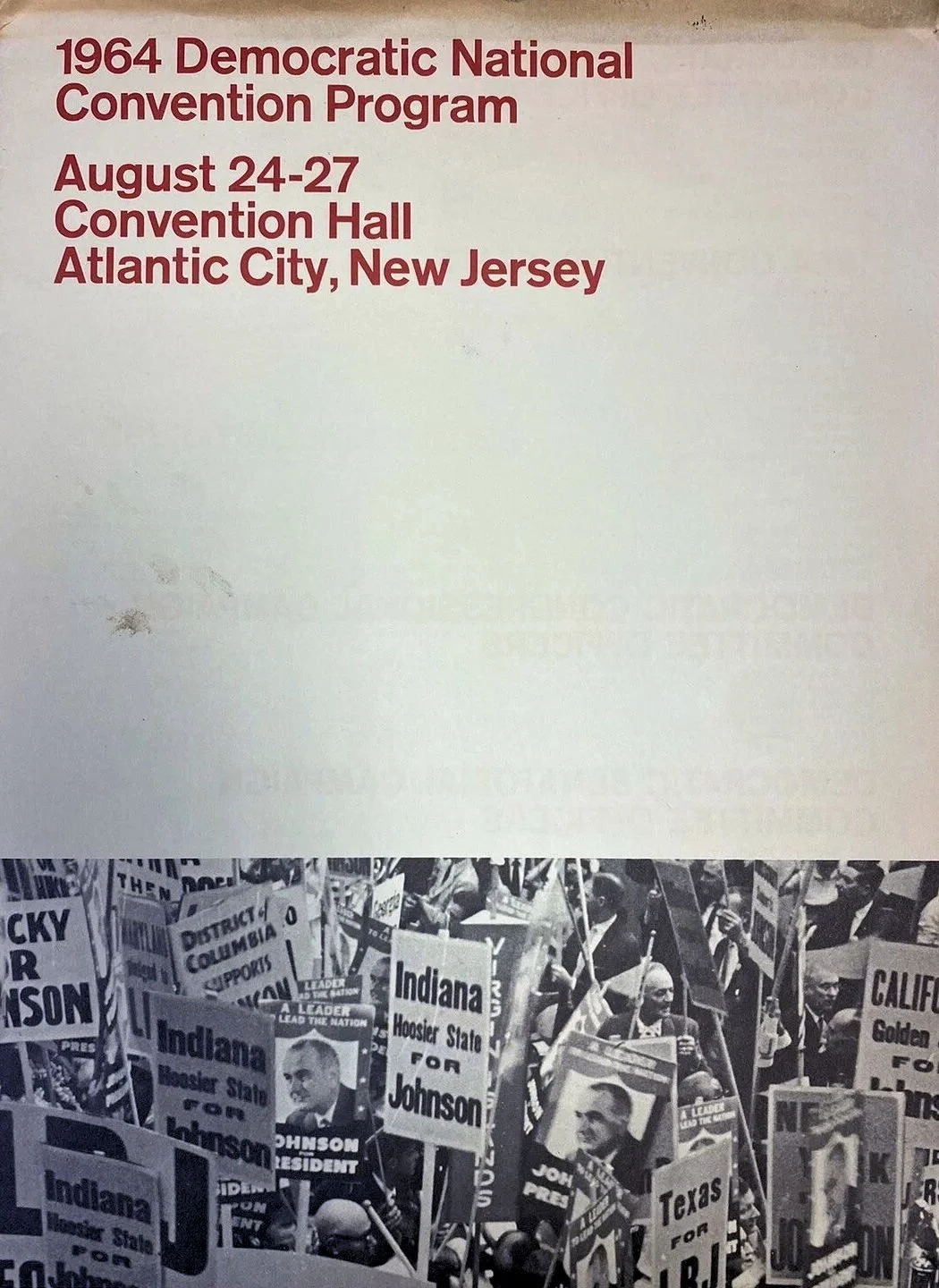
The program from the 1964 Democratic National Convention. Entertainment on Saturday, Aug. 27 featured Paul Newman, Barbra Streisand and the folk singing group Peter, Paul & Mary.
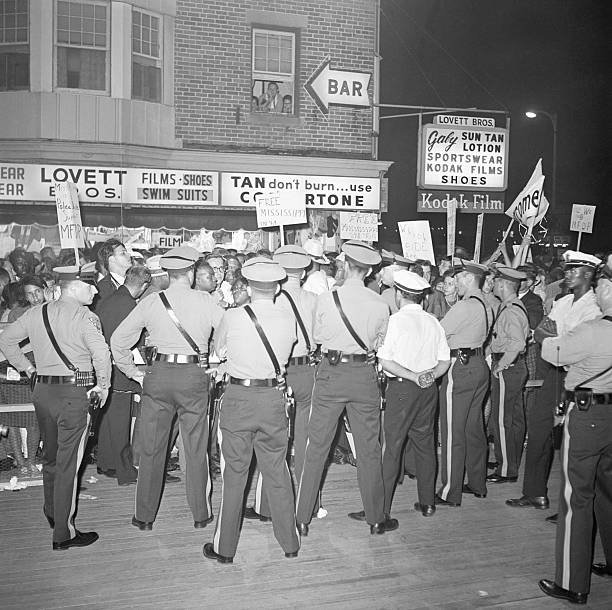
Police surround Fannie Lou Hamer and others in an attempt to keep members of the Mississippi Freedom Democratic Party from entering the Democratic National Convention.
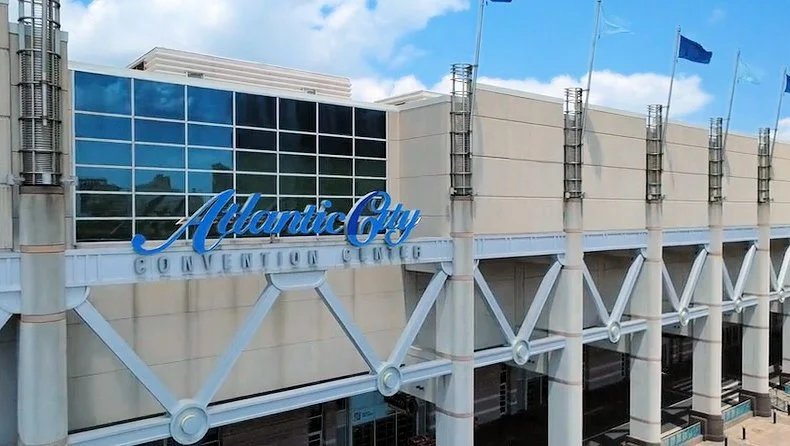
The new Convention Center.
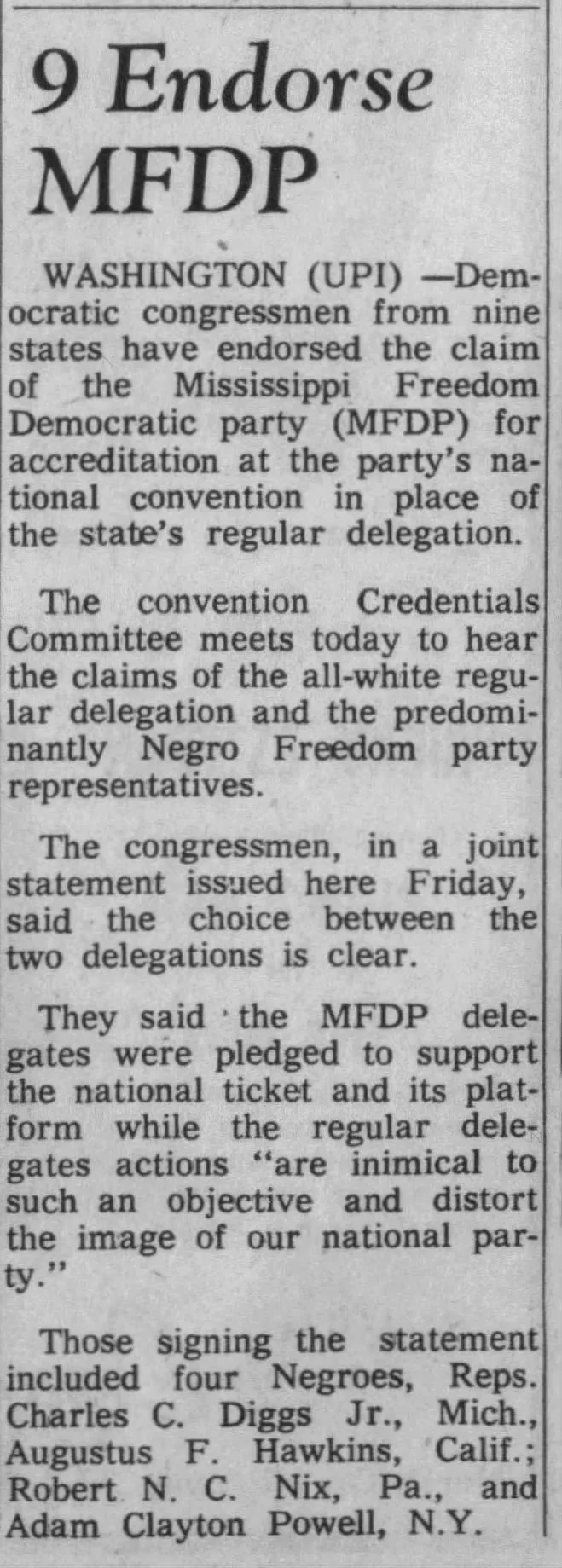
A news article from The Herald Times, August 22, 1964.
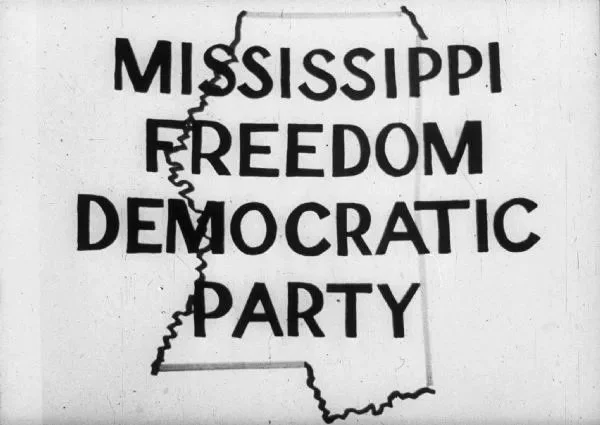
The MFDP was formed so Black Mississippians could have a voice in the Democratic process.
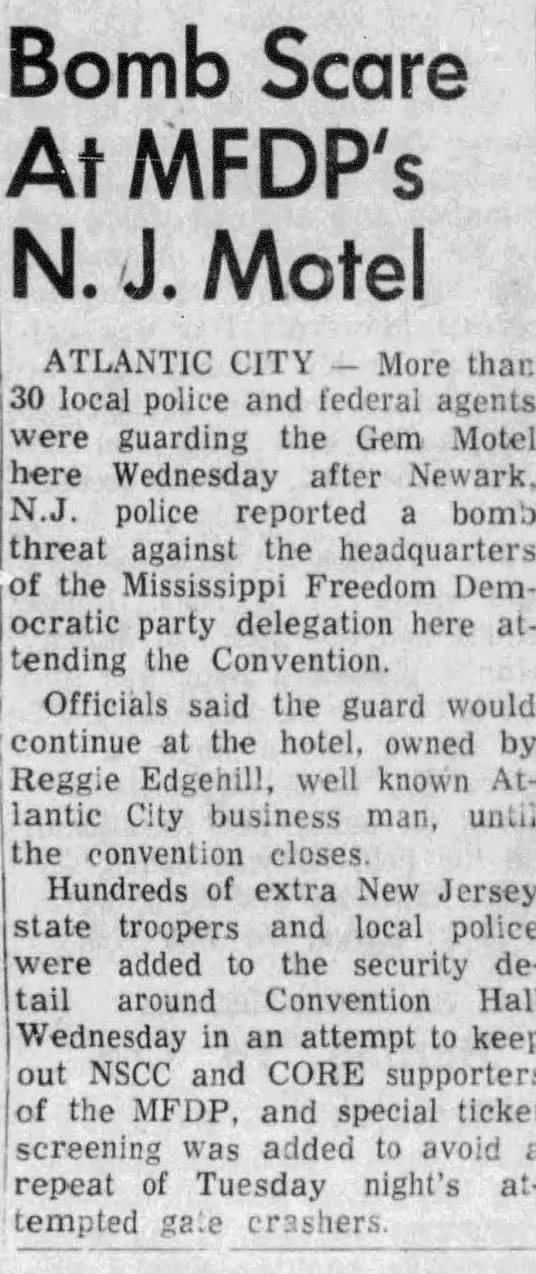
Article from the Sept. 5, 1964 New York Amsterdam News.
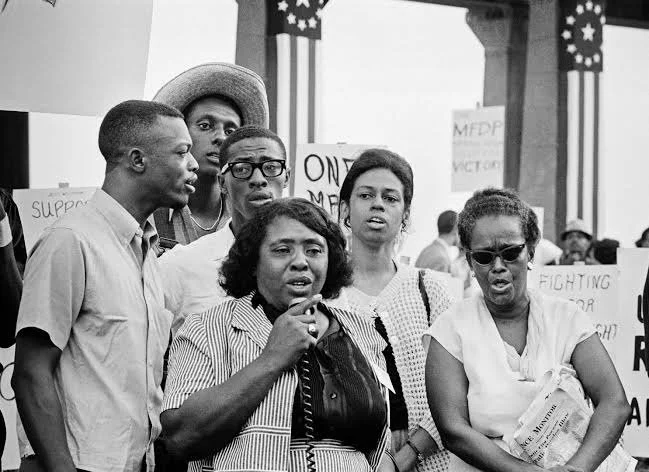
MFDP founders Fannie Lou Hamer (c) and Ella Baker (far right) and delegates, (far left to right rear) Emory Harris, Stokely Carmichael (straw hat), Sam Block and Eleanor Holmes Norton sing on the Boardwalk during the Democratic National Convention.
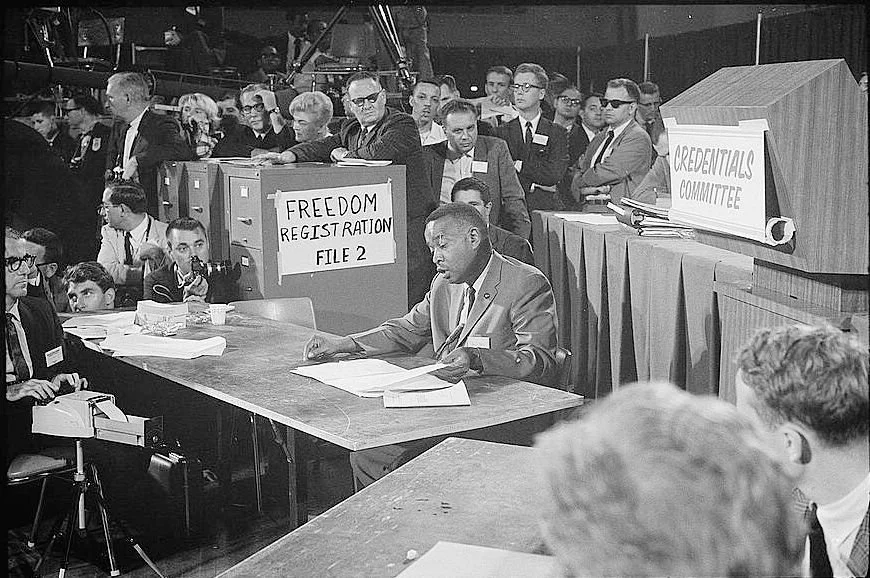
Aaron Henry, chair of the MFDP speaks before the Credentials Committee at the Democratic National Convention.
Tourist Attractions.
The Convention Center.
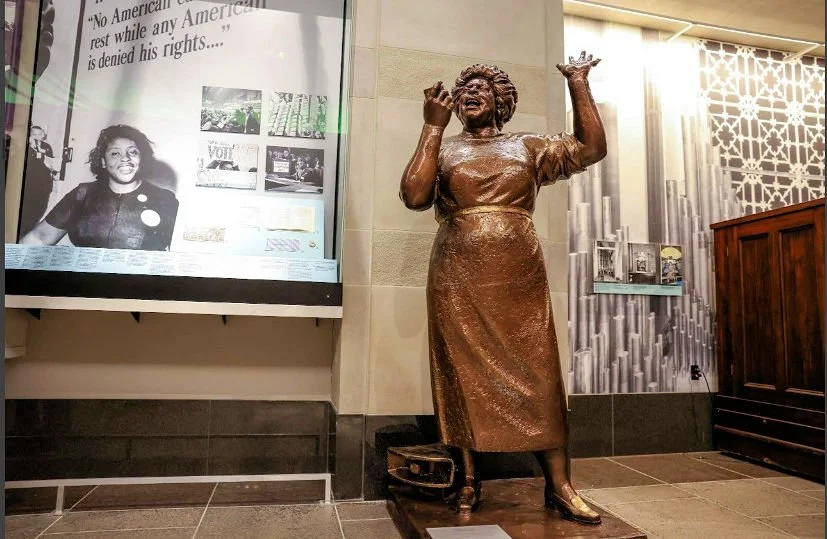
The Fannie Lou Hamer statue on the Jim Whelan Boardwalk.
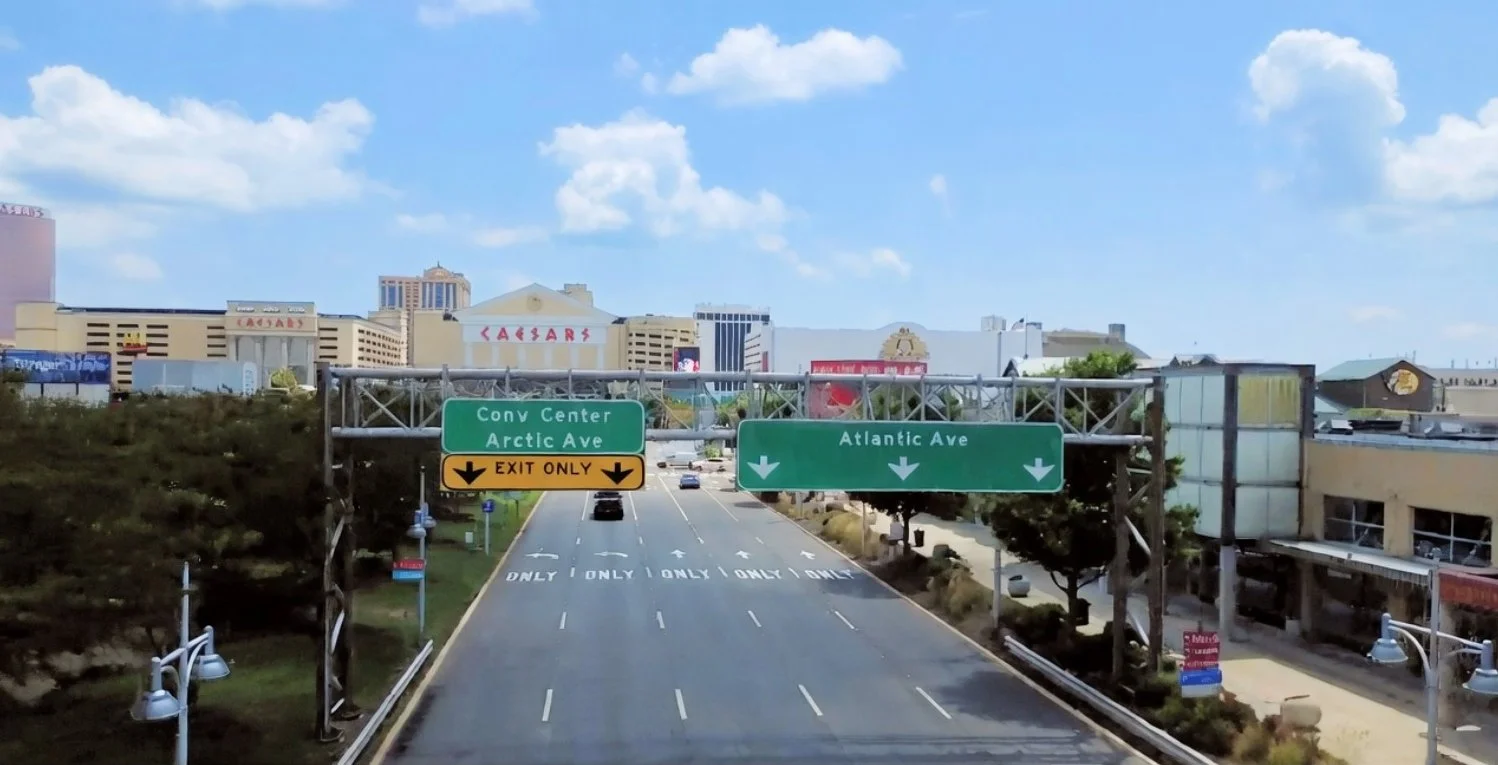
"As an iconic destination and a vibrant hub of entertainment, offering an impressive lineup of year-round, and often free, events and festivals that keep visitors coming back again and again," Atlantic City garnered nationwide attention in August 1964.
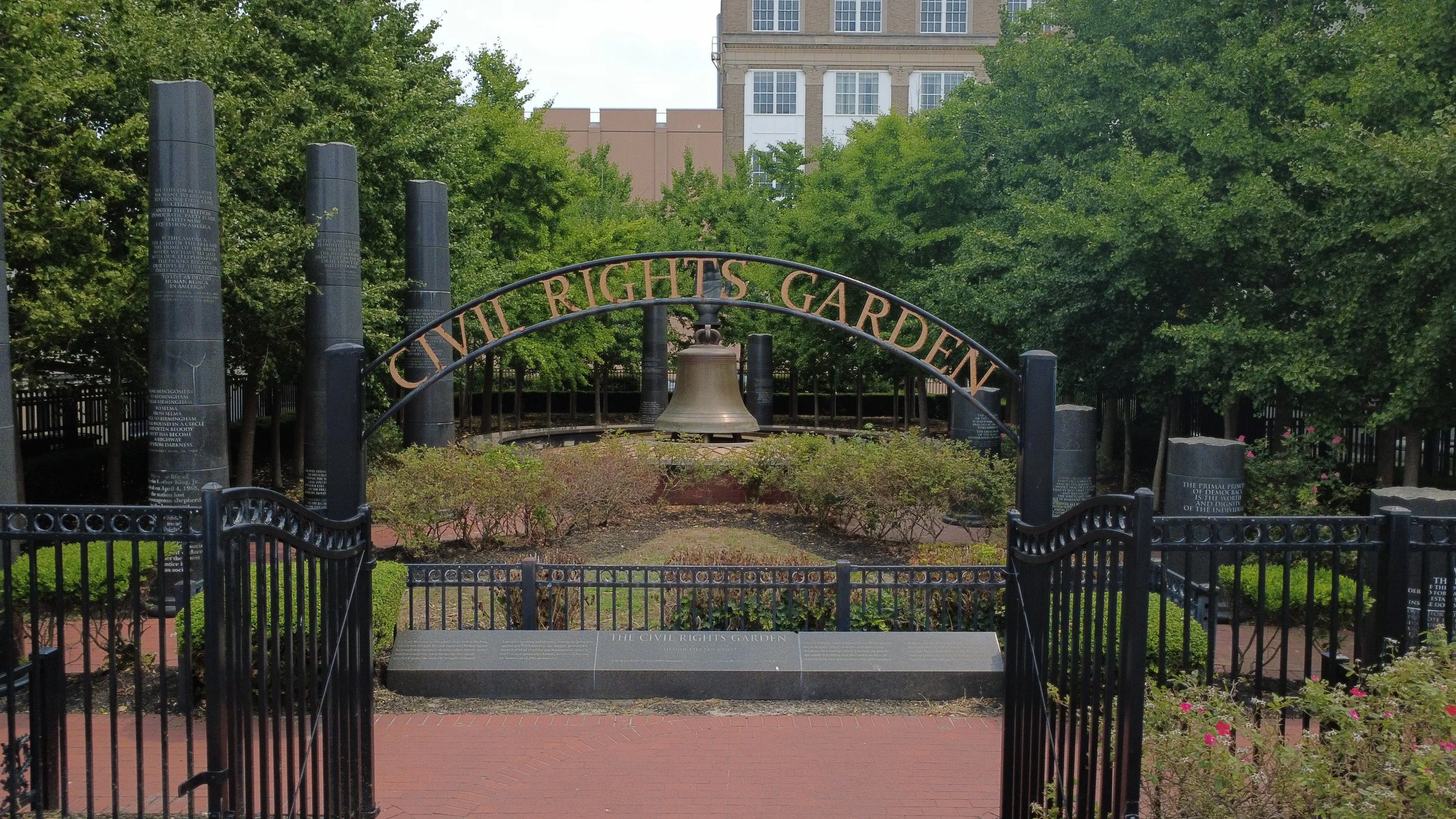
In 2001, the Civil Rights Memorial Garden honoring Hamer and other historic figures opened on Pacific Avenue and MLK Blvd. Artist Larry Kirkland worked with historians Clement Price and Collins Days.
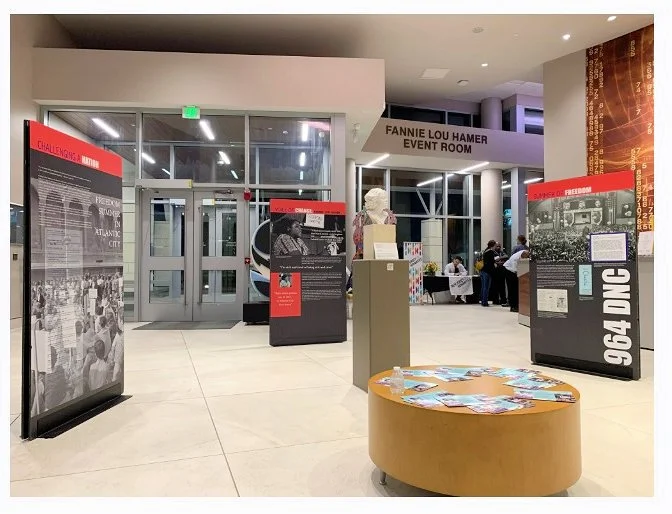
The African American Heritage Museum in Atlantic City, founded by historian Ralph Hunter, includes a traveling exhibit featuring Fannie Lou Hamer.
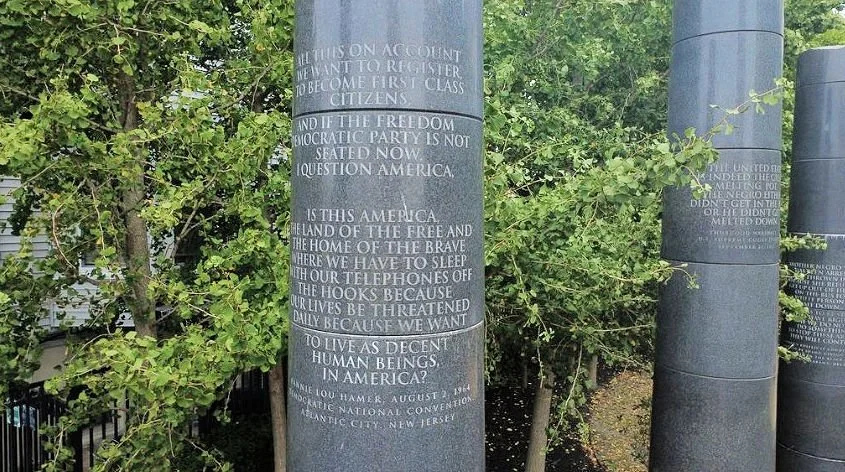
A column bearing a quote from Fannie Lou Hamer's testimony at the Democratic National Convention at the Civil Rights Memorial Garden.
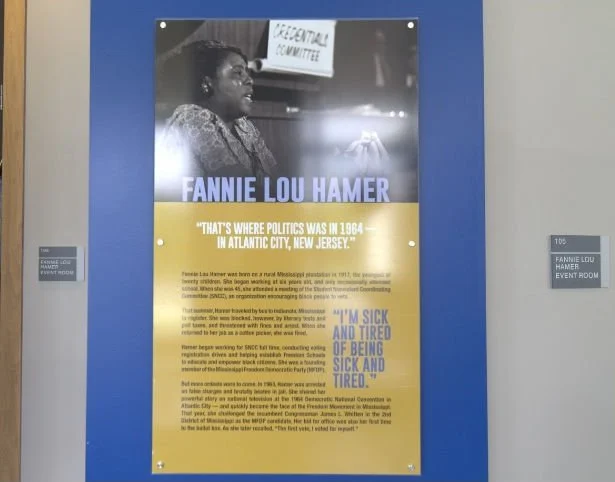
The signage for the Fannie Lou Hamer Event Room at Stockton University in Atlantic City.
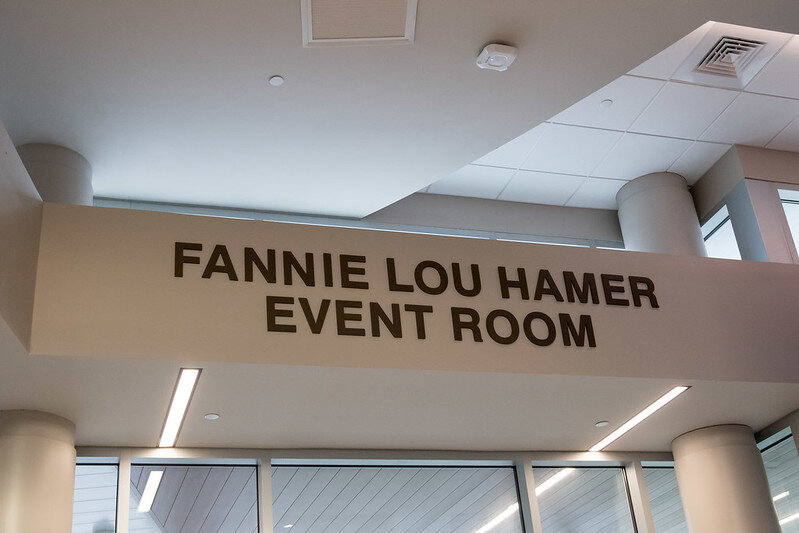
The entrance to the Fannie Lou Hamer Event Room at the Atlantic City campus of Stockton University.

The audience at the unveliling of the Fannie Lou Hamer Event Room in Stockton listen to Hamer's daughter, Jacqueline's video message for the 2018 occasion.

Workers from UNITE HERE! Local 54 held a candlelight vigil, march and marker unveiling in Hamer's honor in 2020.

A marker honoring the efforts of Fannie Lou Hamer and the MFDP at the Democratic National Convention was unveiled on the Boardwalk in 2024. The marker is now in storage while the Boardwalk is being renovated.
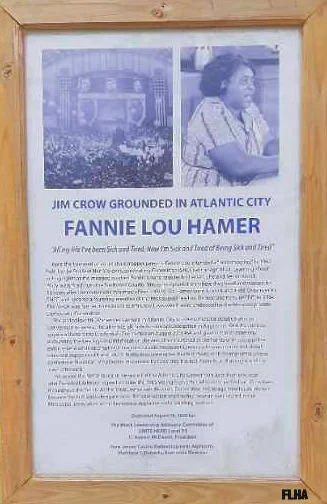
Workers from UNITE HERE! Local 54 erected a marker in Hamer's honor on the Boardwalk in 2020. The marker is in storage while the Boardwalk is being renovated.
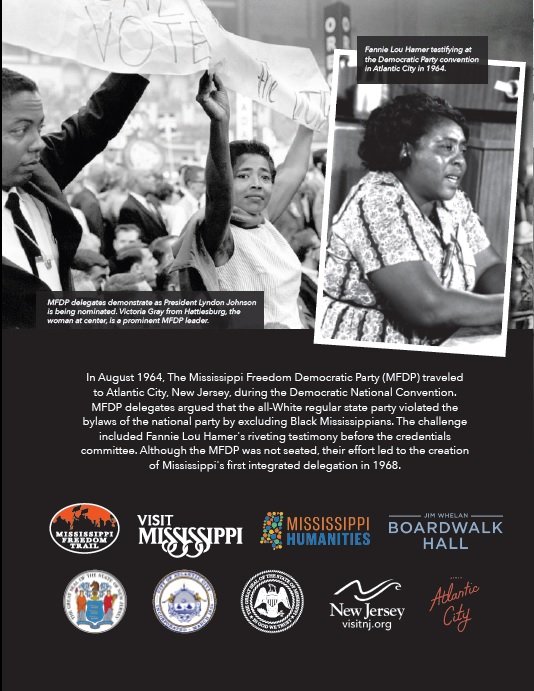
The program for the unveiling of the MFDP Marker on the Boardwalk. The marker was the first Mississippi Freedom Trail Marker placed outside of the state.

The unveiling of the signage for the Fannie Lou Hamer Event Room at Stockton.
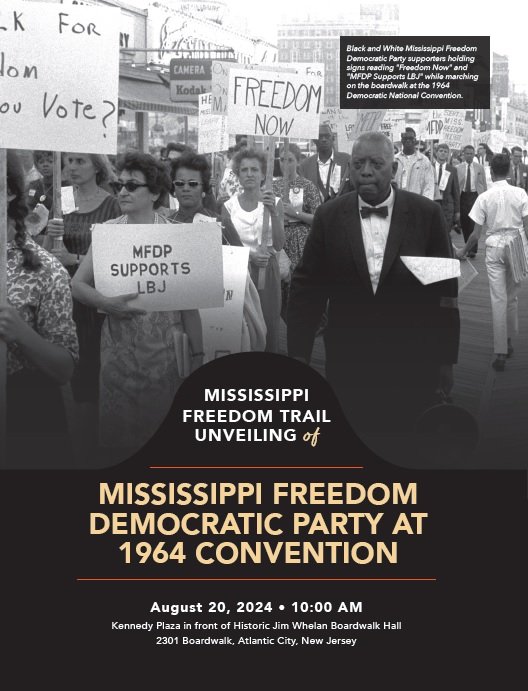
The program for the unveiling of the MFDP Marker on the Boardwalk. The marker was the first Mississippi Freedom Trail Marker placed outside of the state.
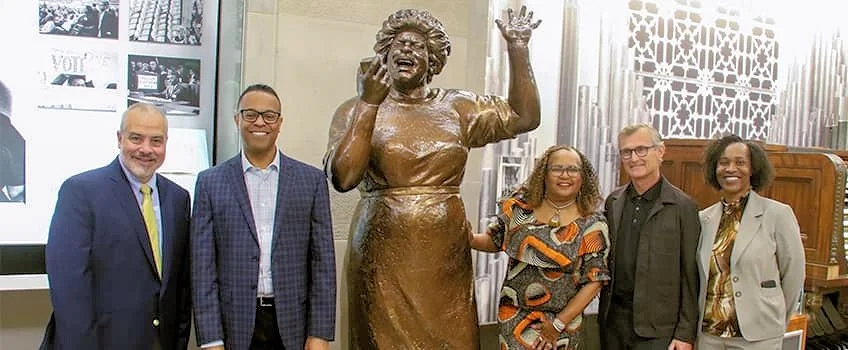
(From l to r) Stockton President Joe Bertolino; Brian Jackson, chief operating officer of Stockton’s Atlantic City campus; Patricia Reid-Merritt, Stockton Distinguished Professor of Africana Studies and Social Work; Brian Hanlon, sculptor of the statue; and Donnetrice Allison, professor of Africana Studies and Communication Studies attend the unveiling on Boardwalk Hall in 2023.
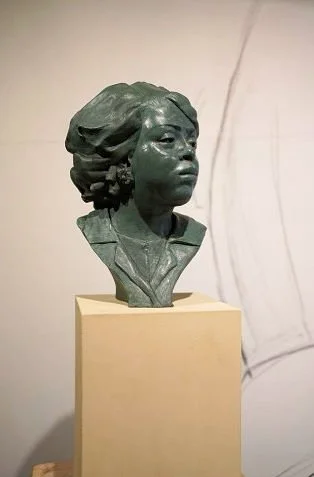
A bust of Fannie Lou Hamer on display and for sale at the African American Heritage Museum.
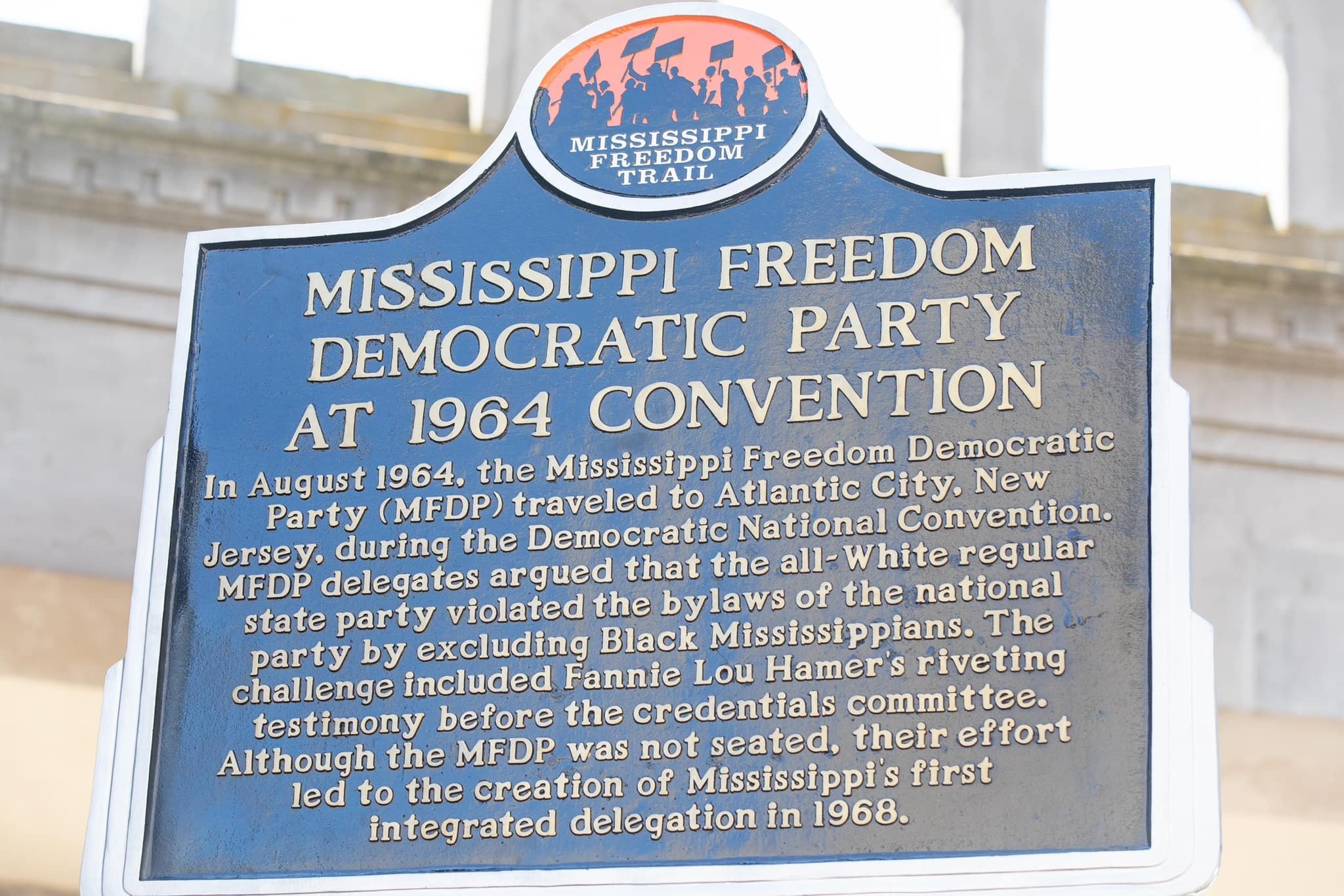
The first Mississippi Freedom Trail historical marker placed outside of the state is in Atlantic City, New Jersey.
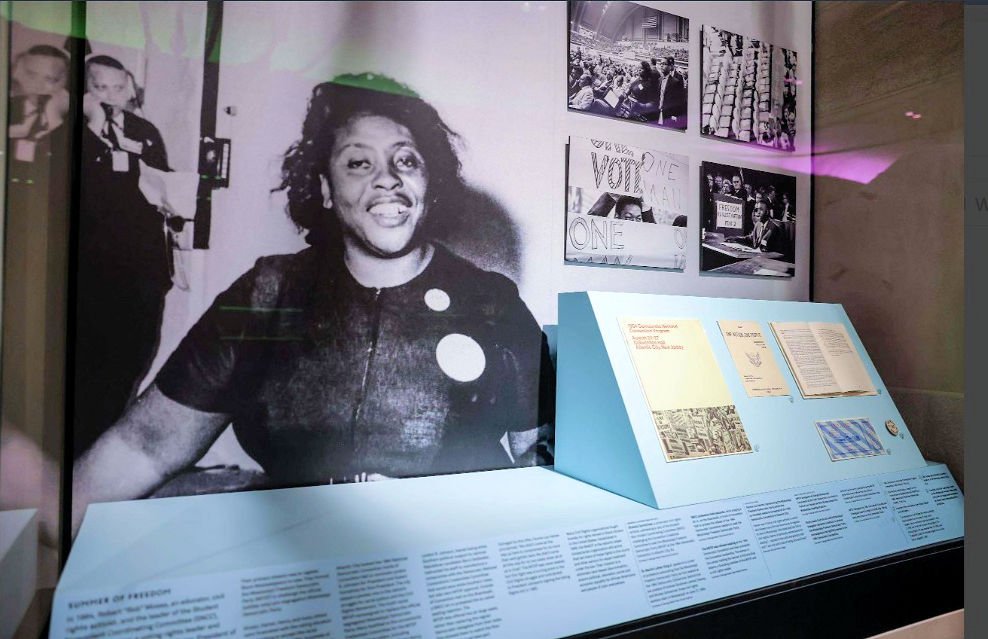
A dispay of Fannie Lou Hamer next to her statue on the Jim Whelan Boardwalk.
Directions.
Jim Whelan Boardwalk Hall African American Heritage MuseumStockton University - Atlantic City CampusCivil Rights Memorial GardenAccommodations.
-

LODGING
-

DINING
-

ATTRACTIONS
-

HISTORICAL MARKERS
Our Sponsor.