
Songs About Fannie Lou Hamer
Mrs. Fannie Lou Hamer (above) before a group of Mississippi Freedom Democratic Party sympathizers outside the Capitol in Washington, Sept. 17, 1965, after the House of Representatives rejected a challenger to the 1964 election of five Mississippi representatives. Listen to the speeches and songs of Fannie Lou HamerWhen Fannie Lou Hamer began to sing, her voice became a force of unity and hope. She sang from the bottom of her soul. And she moved so many to action. It was her singing, in fact, that caused the Student Nonviolent Coordinating Committee (SNCC) to recruit her for their cause. From that point on, realizing the power of her voice, Fannie Lou Hamer was chosen to motivate and empower others in the protest lines, meeting halls - wherever the people were. Her songs transformed fear into courage and despair into resolve. Hamer’s singing rallied communities, drawing individuals together in a shared purpose, and often gave people the strength to persist in the face of intimidation or violence.Whether leading “This Little Light of Mine” or inspiring new songs that now bear her name, Hamer’s music offered comfort to the weary and courage to the hesitant. Her powerful voice not only called for justice but awakened it in others, reminding everyone that change was possible when they stood and sang together.The songs on this page honor Fannie Lou Hamer's enduring spirit and her pivotal role in the fight for human rights. Many are performed by artists and groups dedicated to social justice and freedom, reflecting Hamer's courage and legacy.“Fannie Lou”
Written by Joe DeFilippo and performed by the R.J. Phillips Band
“Fannie Lou”
“Working in the fields, since the age of six,
Overseer said, another bale to pick.
One hundred pounds, somedays two,
Montgomery County to Mound Bayou,
Ooh-Fannie Lou.
Wasn’t long, before your voice was heard.
They tried to silence, your each and every word.
And when you registered to vote, they threatened you.
Ooh-Fannie Lou
Thru-out Mississippi; your reputation grew.
Their guns and their bullets, could not stop Fannie Lou.
And when you registered to vote, they threatened you.
Ooh-Fannie Lou
You became friends; with Malcolm.
Eastland was your foe.
They beat you and despised you.
And you let them know,
That you were ‘sick and tired’, ‘sick and tired’ thru and thru.
A fighter for freedom: Fannie Lou”
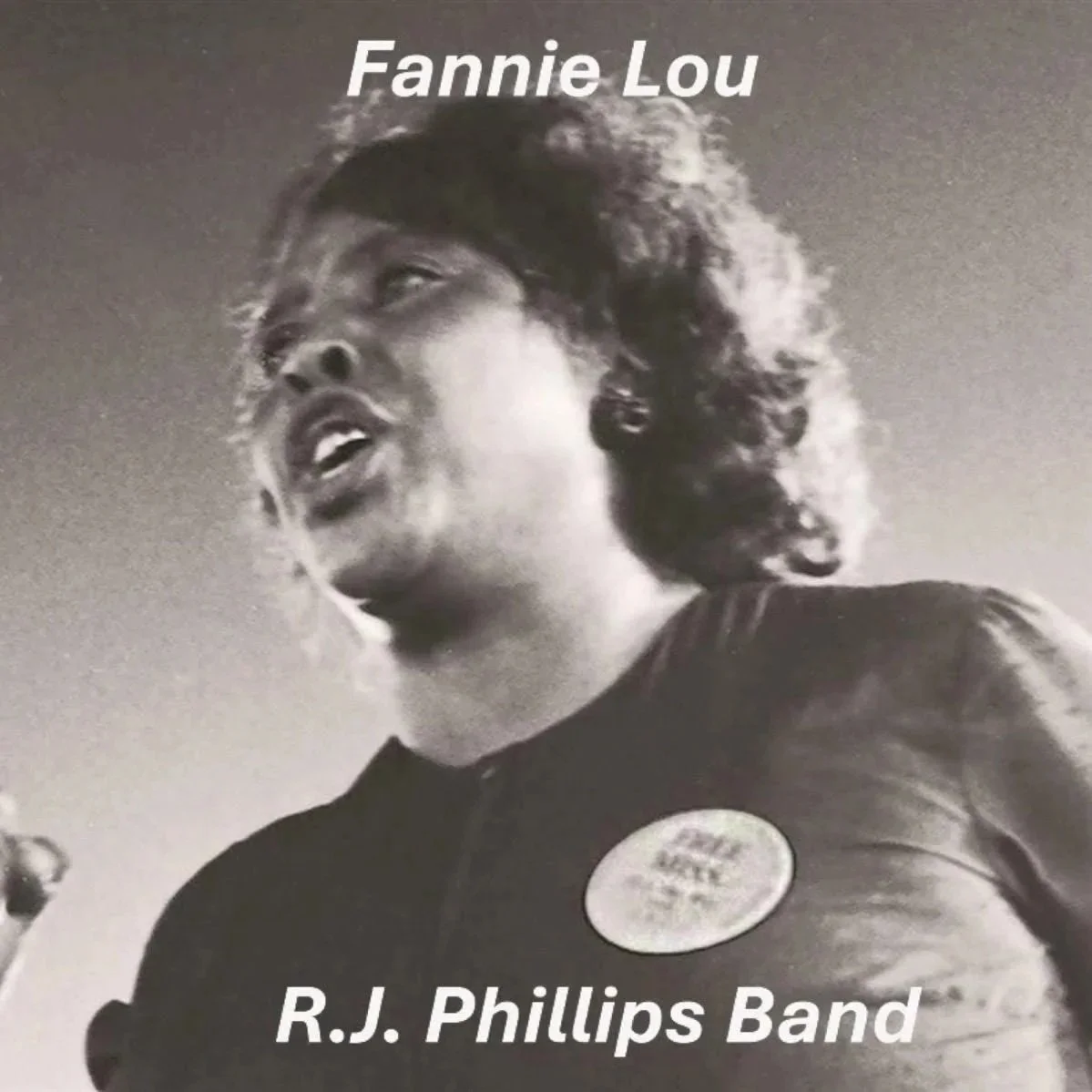
The R.J. Phillips Band hails from Baltimore, Maryland and has more than 90 recordings, most notably "Freedom Ride" used in 2018 by Spike Lee in his Academy Award winning film, "BlacKkKlansman."Songwriter, Joe De Felippo said, "whereas, Fannie Lou was a voting and women's rights activist, community organizer, and leader of the civil rights movement, we felt this musical tribute was long overdue."“Sick And Tired”
Written and performed by The Sounds of Blackness
“Sick and Tired”
“Tired! (Fannie Lou Hamer said).
Sick and Tired. (Fannie Lou Hamer said)…
Tired of injustice and brutality.
Tired of the beatings and fatalities.
Tired of the racist inhumanity.
Sick and Tired of bein’ Sick and Tired.
Tired of the hate and discrimination.
Tired of the second-class frustration.
Tired of lynchings for generations,
Sick and tired a bein’ sick & tired.”
In June 2020, the three-time Grammy Award winning group, the Sounds of Blackness released a new song that they said is an “amazing anthem for the movement” and reflects the 400 years of systemic injustice, inequality and inhumanity that continues today.The group’s manager said they are expressing the “perpetual pain and rage of Black people in the words of the great Fannie Lou Hamer: “I’m sick and tired of being sick and tired!” Fannie Lou Hamer spoke those words often as she diligently campaigned for equal rights for everyone during the 1960s and 70s, enduring beatings, jailing and death threats to do so.Sounds of Blackness is a vocal and instrumental ensemble from Minneapolis/St. Paul, Minnesota who perform music from several genres including R&B, soul, gospel and jazz. The group scored several hits on the Billboard R&B and Hot Dance Music/Club Play charts in the 1990s including I Believe, Testify and another upbeat anthem of sorts, Optimistic.The group’s music director and producer, Gary Hines, said several Sounds of Blackness soloists are featured on the life-changing track, along with the unmistakable voice of Jamecia Bennet, who also directed the “Sick and Tired” video. The song also features their special guests, HSRA (High School for Recording Arts). The song was recorded at the charter high school in St. Paul, Minnesota.“Fannie Lou Hamer”
Written by Bernice Johnson Reagon and performed by Sweet Honey In The Rock
“Fannie Lou Hamer”
(Epilogue)
“Fannie Lou Hamer was a Black woman who lived, struggled and died in the state of Mississippi.
During the civil rights movement of the 1960s, she became a symbol of the strength and power of resistance.
As thousands of blacks filled the streets fighting against racism that had crippled their lives for centuries.
We call her name today in the tradition of African libation.
By pouring libation, we honor those who provide the ground we stand on.
We acknowledge that we are here today because of something someone did before we came.
Fannie Lou Hamer
Fannie Lou Hamer
Fannie Lou Hamer
Fannie Lou Hamer
Oh, this little light of mine.
Her song would fill the air.
She rocked the state of Mississippi.
Now a few more Black people stand there.
Fannie Lou Hamer
Fannie Lou Hamer
Fannie Lou Hamer
Fannie Lou Hamer
For 20 years she weighed the cotton, down on a white man’s farm..
She received threats on her life.
Was fired from her job.
Scorned and kicked off the farm.
Fannie Lou Hamer
Fannie Lou Hamer
Fannie Lou Hamer
Fannie Lou Hamer
We’re ‘sick and tired of being sick and tired.’
That’s what the lady would yell.
Her body was beaten, and she walked cripple
Trying to vote, she was thrown in jail.
Fannie Lou Hamer
Fannie Lou Hamer
Fannie Lou Hamer
Fannie Lou Hamer
Land of the tree and home of the slave.
She criticized the law of the land.
For 100 years, Blacks had lived in fear.
Now they marched, took their lives in their hands.
Fannie Lou Hamer
Fannie Lou Hamer
Fannie Lou Hamer
Fannie Lou Hamer
She came by here and she didn’t stay long,
Helped to turn a few things around.
Cancer took her body, but her struggle got her soul
Now we lay her body in the ground
Fannie Lou Hamer
Fannie Lou Hamer
Fannie Lou Hamer
Fannie Lou Hamer
Sweet Honey in the Rock are a dynamic, virtuosic, all-female a cappella group with a repertoire rooted in African choral, blues, gospel, and jazz. Earning an international following since their inception in 1973, the group use only body - and hand-held percussion to accompany their vocalizations, if using any accompaniment at all.Founded by Bernice Johnson Reagon (1942-2024), who often sang with Fannie Lou Hamer, the group also included Louise Robinson, Carol Lynn Maillard, Nitanju Bolade Casel and Aisha Kahlil.As a tribute to her friend and the voting rights advocate, Johnson Reagon wrote “Fannie Lou Hamer” for the group’s album B'lieve I'll Run On... See What the End's Gonna Be.They are a three-time Grammy Award–nominated troupe who express their history as black women through song, dance, and sign language.Fannie Lou Hamer and Bernice Johnson Reagon (second fronm right) perform Freedom Songs at the Newport Folk Festival in 1965 with Guy Carawan (left) and Len Chandler (right).